
Groundwater Exploration
The Borehole Logging Systems produced by Delta Epsilon Instruments have proved invaluable for quickly and accurately determining fresh water producing formations from borehole logs.
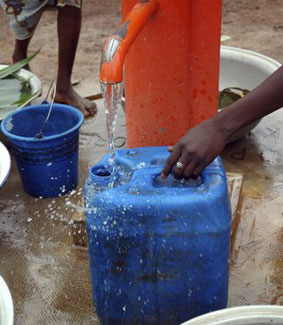
Borehole logging allows drillers and geologists to observe subsurface characteristics otherwise unavailable through alternative methods. Systems equipped with gamma and electric logging probes identify freshwater formations, determine their thickness, and detect undesirable clay intrusions or brackish water presence.
Groundwater logging with a Delta Epsilon well logging system is intuitive and easy to learn, equipment costs are reasonable, and the information gained almost always increases the efficiency and effectiveness of groundwater exploration — supporting proper well design and construction practices. Understanding log interpretation provides valuable geophysical insights that typically justify the associated costs and effort.
Borehole Logging Data
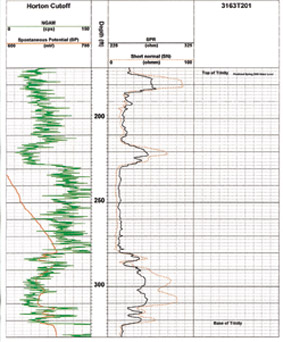
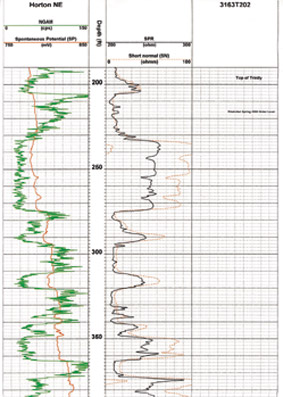
A case study from a Texas site demonstrates how well logs from two adjacent locations showed differing productivity potential, with one site judged unsuitable for completion based on logging data alone — avoiding the cost of a dry or marginal well.
Commonly Used Probes for Groundwater Exploration and Water Well Development
The GE-0809 probe combination measures gamma radiation, single point resistance, spontaneous potential, and resistivity values simultaneously — measurements considered essential for most groundwater exploration applications.
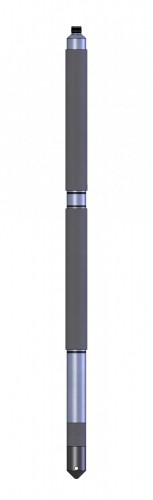
See the full Borehole Probes line for detailed specifications on the GE-0809 and other probes used in groundwater exploration.
Exploring for groundwater on your next project?
Call us at 303-320-4764 Call us or send us a message.